



Humanoid Robot Battery Selection Guide: How to Choose the Right Lithium Battery Pack for AI Robots
The rapid development of artificial intelligence, robotics, and automation technologies is accelerating the commercialization of humanoid robots. From intelligent manufacturing and warehouse operations to healthcare, education, and service applications, humanoid robots are expected to become an important part of future smart industries.
While AI algorithms, sensors, and mechanical structures determine a robot’s intelligence and movement capability, the battery system determines how long the robot can operate, how efficiently it moves, and how safely it performs tasks.
Unlike traditional industrial equipment, humanoid robots require a compact, lightweight, and highly reliable energy system to support:
Multi-joint movement
Walking and balance control
High-precision motion
AI computing systems
Sensors and cameras
Communication modules
Continuous operation
Therefore, selecting the right humanoid robot battery is a critical step for robot manufacturers and OEM companies.
A suitable robot battery pack must provide:
High energy density
Stable power output
Long cycle life
Excellent safety performance
Intelligent battery management
Customized mechanical design
This guide explains how to select the right lithium battery solution for humanoid robots, including battery chemistry, capacity calculation, PACK design, BMS requirements, safety testing, and supplier selection.
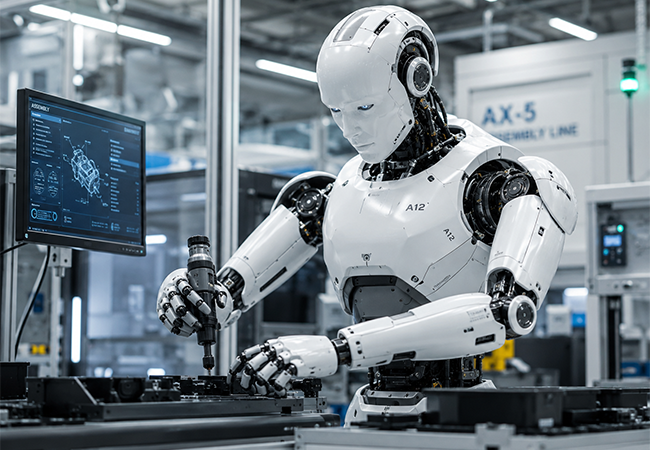
1. Why Battery Selection Is Critical for Humanoid Robots
Humanoid robots have completely different power requirements compared with traditional electric vehicles or stationary energy storage systems.
A robot must carry its own energy source while maintaining balance and mobility. Every additional kilogram of battery weight affects:
Walking efficiency
Motor energy consumption
Payload capability
Operating time
Mechanical stress
The battery is not simply a power supply. It is an integrated energy system that directly influences the overall robot design.
1.1 Limited Installation Space
Most humanoid robots install batteries inside:
Chest compartments
Back modules
Waist areas
Removable battery slots
The available space is usually limited.
Therefore, battery manufacturers need to optimize:
Cell arrangement
PACK structure
Thermal management
Protection design
A customized battery pack allows robot manufacturers to maximize available space and achieve better system integration.
2. Key Requirements of Humanoid Robot Batteries
2.1 High Energy Density
Energy density determines how much energy a battery can store compared with its weight.
Formula:
Energy Density (Wh/kg) = Battery Energy (Wh) ÷ Battery Weight (kg)
Higher energy density allows robots to:
Carry lighter batteries
Extend operating time
Improve movement flexibility
Common battery targets for humanoid robots:
| Parameter | Typical Range |
|---|---|
| Battery Voltage | 24V / 36V / 48V / 72V |
| Capacity | 10Ah - 100Ah |
| Energy Output | 500Wh - 3000Wh |
| PACK Energy Density | 150-250Wh/kg |
For high-performance humanoid robots, cylindrical NMC lithium cells such as 18650 and 21700 are widely considered due to their balance between energy density and power output.
2.2 High Discharge Capability
Humanoid robots require frequent power changes.
During normal standing:
Power consumption is relatively low.
During movement:
Motors require sudden current increases.
Examples:
Standing up
Walking acceleration
Carrying objects
Maintaining balance
Emergency correction movements
These operations require batteries with:
Low internal resistance
High discharge rate
Stable voltage output
A battery with insufficient discharge capability may cause:
Voltage drops
Motor instability
Reduced robot performance
Unexpected shutdown
2.3 Long Cycle Life
Commercial robots are designed for frequent operation.
Industrial applications may require:
Daily operation
Multiple charging cycles
Long service periods
Therefore, battery cycle life is an important consideration.
Typical expectations:
| Battery Type | Cycle Life |
|---|---|
| NMC Lithium Battery | 1000-2000 cycles |
| LiFePO4 Battery | 2000-5000 cycles |
The correct chemistry depends on the application.
For example:
Research robots may prioritize lightweight design.
Factory robots may prioritize durability and long service life.
3. Choosing Battery Chemistry for Humanoid Robots
Currently, two major lithium battery technologies are commonly considered:
NMC lithium-ion batteries
LiFePO4 lithium batteries
Each chemistry has different advantages.
3.1 NMC Lithium Battery for Humanoid Robots
NMC stands for:
Nickel Manganese Cobalt
NMC batteries are widely used in applications requiring:
High energy density
Lightweight design
High power output
Advantages of NMC Battery Packs
High Energy Density
NMC cells can store more energy in a smaller volume.
This helps humanoid robots achieve:
Longer operating time
Reduced battery weight
Better mobility
Excellent Power Performance
NMC batteries provide strong discharge capability, making them suitable for:
Dynamic movement
Robotic arms
High-speed motion
Heavy-load applications
Compact Design
Using cylindrical cells such as:
18650
21700
allows flexible PACK configurations.
Manufacturers can customize:
Battery shape
Voltage
Capacity
Connector position
Recommended Applications
NMC battery packs are suitable for:
Advanced humanoid robots
AI robots
Mobile industrial robots
High-performance robotic platforms
3.2 LiFePO4 Battery for Humanoid Robots
LiFePO4 stands for:
Lithium Iron Phosphate
LiFePO4 batteries are known for safety and durability.
Advantages of LiFePO4 Battery Packs
Excellent Safety Performance
The chemical structure provides:
Better thermal stability
Lower thermal runaway risk
Reliable operation
Long Service Life
LiFePO4 batteries are suitable for robots requiring:
Frequent charging
Long operating hours
Low maintenance
Stable Performance
They maintain stable output during long-term operation.
Recommended Applications
LiFePO4 batteries are commonly used for:
Industrial robots
AMR robots
AGV systems
Inspection robots
Service robots
4. NMC vs LiFePO4: Which Battery Is Better for Humanoid Robots?
| Feature | NMC Battery | LiFePO4 Battery |
|---|---|---|
| Energy Density | Higher | Moderate |
| Weight | Lighter | Heavier |
| Safety | Good | Excellent |
| Cycle Life | 1000-2000 cycles | 2000-5000 cycles |
| Power Output | Excellent | Excellent |
| Cost | Higher | Lower |
| Compact Robot Design | Recommended | Suitable |
| Industrial Long-Term Use | Suitable | Recommended |
Selection Recommendation
Choose NMC Battery When:
Weight reduction is important
Robot requires long endurance
Space is limited
High movement performance is required
Examples:
Humanoid robots
AI robots
Advanced service robots
Choose LiFePO4 Battery When:
Safety is the priority
Robot operates continuously
Long cycle life is required
Examples:
Factory robots
Warehouse robots
Inspection robots
5. How to Calculate Battery Capacity for Humanoid Robots?
Selecting the correct battery capacity is one of the most important steps in robot battery design.
A battery that is too small may cause:
Short operating time
Frequent charging
Reduced productivity
A battery that is too large may cause:
Increased robot weight
Higher energy consumption
Reduced movement efficiency
Therefore, battery capacity should be calculated according to the robot’s power consumption and working requirements.
5.1 Basic Battery Capacity Formula
The basic calculation method is:
Battery Energy (Wh) = Average Power Consumption (W) × Operating Time (h)
Example:
A humanoid robot consumes:
Average power: 400W
Required working time: 5 hours
Calculation:
400W × 5h = 2000Wh
The robot requires approximately:
2000Wh battery capacity
5.2 Common Humanoid Robot Battery Specifications
Different robot sizes require different battery configurations.
| Robot Type | Recommended Battery Solution |
|---|---|
| Small Research Robot | 24V 10Ah-30Ah |
| Service Humanoid Robot | 36V 20Ah-60Ah |
| Industrial Humanoid Robot | 48V 30Ah-100Ah |
| High Performance Robot | 72V 30Ah-80Ah |
Common battery platforms include:
24V lithium battery pack
36V lithium battery pack
48V lithium battery pack
72V lithium battery pack
6. Humanoid Robot Battery PACK Design
A robot battery pack is more than a combination of cells.
A complete battery system includes:
Battery cells
Cell arrangement
BMS
Protection circuit
Mechanical housing
Thermal management
Communication interface
Charging system
A professional battery PACK design helps improve:
Reliability
Safety
Battery lifespan
Robot performance

 E-mail


 +86 13510702894