



How to Choose a Reliable Drone Battery Manufacturer
The battery is one of the most important components of an unmanned aerial vehicle (UAV). Whether a drone is used for agricultural spraying, aerial inspection, mapping, logistics delivery, or industrial applications, the battery directly affects flight operation, safety, and maintenance requirements.
Choosing a suitable drone battery manufacturer is not only about comparing battery prices. A reliable supplier should understand UAV power requirements, provide suitable battery designs, support product customization, and ensure consistent quality during mass production.
For drone manufacturers and system integrators, selecting the right battery partner can reduce development risks and improve product reliability.
This guide explains the key factors to consider when evaluating a drone battery manufacturer.
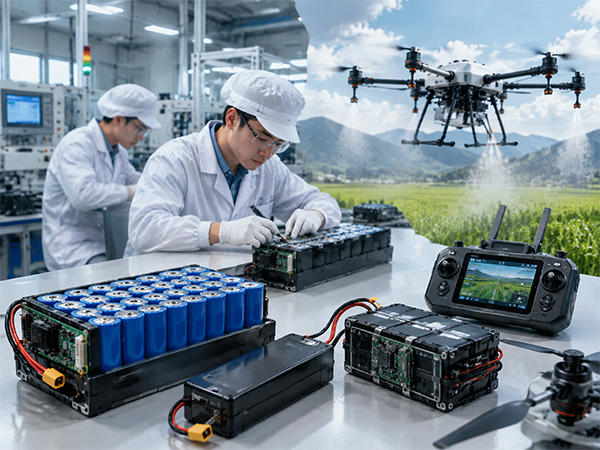
1. Understand Your Drone Battery Requirements Before Selecting a Supplier
Before contacting battery manufacturers, companies should define their application requirements.
Different UAV applications require different battery solutions.
For example:
· Agricultural spraying drones require high discharge capability and stable operation during long working hours.
· Inspection drones may focus on lightweight design and energy efficiency.
· Industrial drones may require communication functions, smart BMS, and environmental protection.
· Delivery drones usually require higher energy density and cycle performance.
A professional battery manufacturer should be able to analyze your requirements instead of simply recommending an existing battery model.
Important parameters include:
Voltage Requirement
Common drone battery systems include:
· 12V
· 14.8V
· 22.2V
· 25.2V
· 44.4V
· Custom voltage platforms
The battery voltage needs to match the drone motor system and electronic components.
Capacity Requirement
Battery capacity determines how much energy can be stored.Higher capacity can provide longer operation time, but it also increases battery weight.A qualified manufacturer should help balance:
· Energy capacity
· Battery weight
· Flight requirements
· Payload capacity
Discharge Rate Requirement
Drones often require high current output during takeoff, acceleration, and payload operation.The battery manufacturer should evaluate:
· Continuous discharge current
· Peak discharge current
· Cell discharge characteristics
· Thermal management
For agricultural drones, stable high-current discharge is especially important because spraying operations often require continuous power output.
2. Evaluate the Manufacturer’s Battery Design Capability
A reliable drone battery supplier should have engineering capabilities, not only assembly capability.Drone battery development usually involves several technical areas:
Battery Cell Selection
Different applications may use:
· Lithium polymer cells
· Lithium-ion cylindrical cells
· High-rate lithium cells
· Custom battery cells
The manufacturer should understand the differences between:
· Energy density
· Internal resistance
· Cycle performance
· Temperature characteristics
Choosing suitable cells helps ensure the battery matches the UAV operating environment.
Battery Pack Structure Design
A professional battery manufacturer should consider:
· Cell arrangement
· Mechanical structure
· Heat dissipation
· Waterproof requirements
· Connector selection
· Protection design
For outdoor drones, batteries may face:
· Dust
· Rain
· Temperature changes
· Vibration
· Impact during transportation
Therefore, battery structure design is an important part of product development.
3. Check Battery Management System (BMS) Capability
The Battery Management System (BMS) plays an important role in monitoring and protecting lithium battery packs.A suitable BMS can monitor:
· Cell voltage
· Charging current
· Discharging current
· Battery temperature
· State of charge (SOC)
· Battery protection status
For smart drone applications, manufacturers may require:
· CAN communication
· UART communication
· RS485 communication
· Battery data monitoring
A battery supplier with BMS development experience can provide better integration support between the battery and drone control system.
4. Review Manufacturing Experience and Quality Control Process
Battery consistency is important for UAV applications because drones often operate under high load conditions.When selecting a manufacturer, companies should evaluate:
Production Equipment
A professional battery factory usually has:
· Cell sorting equipment
· Laser welding equipment
· Automated assembly lines
· Aging testing equipment
· Battery performance testing systems
Quality Inspection Process
Important quality control steps include:
Incoming Cell Inspection
Battery manufacturers should check:
· Cell voltage
· Internal resistance
· Capacity consistency
· Appearance quality
Assembly Inspection
The process may include:
· Welding inspection
· Cable inspection
· BMS connection testing
· Insulation testing
Aging Testing
Battery aging tests help identify abnormal performance before shipment.A complete quality process can reduce potential failures during customer operation.
5. Verify Battery Certifications and Compliance Support
Drone batteries are often transported internationally and may need to meet different market requirements.Common certifications and documents include:
UN38.3 Transportation Testing
UN38.3 is related to lithium battery transportation safety testing, including tests such as altitude simulation, temperature cycling, vibration, shock, and external short circuit.For companies exporting drone batteries globally, UN38.3 documentation is commonly required for transportation compliance.
IEC 62133 Safety Requirements
IEC 62133 provides safety requirements and testing methods for rechargeable lithium battery systems used in portable applications.
Other Market Requirements
Depending on the target market, customers may need:
· CE
· FCC
· RoHS
· UL-related certifications
· Regional transportation documents
A manufacturer familiar with certification processes can help customers reduce compliance communication time.
6. Consider Customization Ability for Different Drone Applications
Many UAV companies do not need standard batteries.They need customized battery packs designed for their products.A capable drone battery manufacturer should support:
Custom Voltage and Capacity
Examples:
· 6S lithium battery pack
· 12S drone battery pack
· 14S UAV battery pack
· Custom Ah capacity
Custom Battery Housing
Battery structures may need to fit:
· Drone frame design
· Installation space
· Connector position
· Waterproof requirements
Custom Communication Functions
For commercial drones, smart battery functions may include:
· Remaining capacity display
· Battery health monitoring
· Data communication
· Fault warning
Customization capability allows battery design to match the complete UAV system.
7. Evaluate Supplier Communication and Project Support
Battery projects usually involve multiple development stages:
· Requirement analysis
· Battery design
· Prototype production
· Testing and validation
· Mass production
A reliable supplier should provide technical communication during each stage.
Important questions to ask:
· Can you provide battery design recommendations?
· Can you support prototype development?
· What testing reports are available?
· How do you control production consistency?
· What after-sales support is available?
Good communication helps avoid misunderstandings during development.
8. Compare Total Cost Instead of Only Battery Price
Battery price is an important factor, but it should not be the only consideration.A lower initial price may involve risks such as:
· Inconsistent cells
· Limited testing
· Poor customization support
· Higher replacement costs
When evaluating suppliers, consider:
· Battery quality
· Certification support
· Engineering service
· Production capability
· Long-term cooperation potential
A suitable supplier should provide a balance between cost, performance, and reliability.
9. Questions to Ask Before Choosing a Drone Battery Manufacturer
Before starting cooperation, UAV companies can ask:
About Manufacturing
· How many years of battery manufacturing experience do you have?
· What applications have you supported?
· Do you have your own production facility?
About Technology
· Which battery cells do you use?
· Can you customize voltage and capacity?
· Do you develop BMS solutions?
About Quality
· What testing process do you use?
· Do you perform aging tests?
· Can you provide quality documents?
About Certification
· Can you provide UN38.3 reports?
· Do you support CE or other market requirements?
These questions help companies understand the supplier’s actual capability.
10. Why Choose a Professional Drone Battery OEM Partner?
For UAV manufacturers, working with an experienced OEM battery supplier can provide:
· Customized battery pack design
· Engineering support
· Production management
· Certification assistance
· Stable supply capability
A professional battery partner works together with the drone company from concept development to mass production.
Conclusion
Choosing a reliable drone battery manufacturer requires evaluating multiple factors, including battery technology, customization capability, production quality, certification support, and technical communication.A suitable supplier should understand UAV application requirements and provide battery solutions that match the drone system.For agricultural drones, industrial UAVs, inspection drones, and other commercial applications, selecting the right battery partner helps create safer and more efficient products while supporting long-term business development.
FAQ
What type of battery is commonly used for drones?
Most commercial drones use lithium-based batteries, including lithium polymer (LiPo) and lithium-ion battery packs. The suitable battery type depends on weight, discharge requirements, and application conditions.
What certifications are required for drone batteries?
Common requirements include UN38.3 transportation testing and battery safety certifications such as IEC 62133. Additional requirements depend on the destination market and application.
Can drone batteries be customized?
Yes. Many battery manufacturers provide customization services including voltage, capacity, battery shape, connectors, BMS communication, and housing design.
How do I verify a drone battery supplier?
You can check:
· Manufacturing capability
· Testing process
· Certification documents
· Engineering experience
· Previous application experience
What makes a good UAV battery?A suitable UAV battery should provide stable power output, proper weight balance, safety protection, and compatibility with the drone system.

 E-mail


 +86 13510702894