



Logistics Robot Battery | Custom Lithium Battery Pack
Electric tow tractors are used to move carts, trailers, material racks, and other loads in warehouses, factories, airports, distribution centers, and industrial facilities.
The battery supplies electrical energy to the traction motor, motor controller, steering system, display, safety equipment, and other electrical components.
A lithium battery for electric tow tractors needs to match the electrical and mechanical requirements of the vehicle. Voltage and capacity are important parameters, while battery current, towing load, operating cycle, charging method, installation dimensions, BMS configuration, and environmental conditions also need to be considered.
A custom lithium battery pack can be developed according to the specifications of the electric tow tractor.
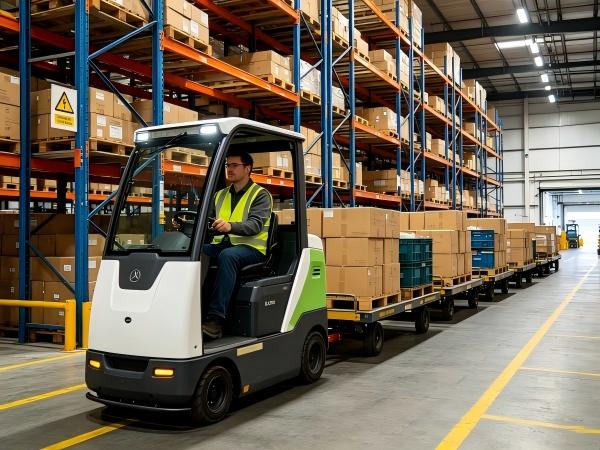
What Is an Electric Tow Tractor Battery?
An electric tow tractor battery is a rechargeable battery pack that supplies electrical power to an electric towing vehicle.
Depending on the vehicle design, the battery may provide power to:
Traction motors
Motor controllers
Steering systems
Hydraulic systems
Braking systems
Displays
Lighting
Safety systems
Communication equipment
The required battery configuration depends on the vehicle's electrical architecture and operating requirements.
Why Use Lithium Batteries for Electric Tow Tractors?
Lithium-ion batteries can be used in electric tow tractor applications where rechargeable energy storage is required.
Battery selection can consider:
Voltage
Capacity
Energy
Continuous current
Peak current
Charging requirements
Battery dimensions
Battery weight
BMS functions
Operating temperature
LiFePO4 is one lithium-ion chemistry that can be evaluated for industrial tow tractor applications. The appropriate chemistry depends on the equipment requirements and operating conditions.
LiFePO4 Battery for Electric Tow Tractors
LiFePO4, also known as lithium iron phosphate or LFP, is a lithium-ion battery chemistry used in rechargeable battery systems.
For example, a 51.2V 100Ah battery has a nominal energy of:
51.2V × 100Ah = 5,120Wh = 5.12kWh
Actual usable energy depends on the battery operating window, load, temperature, BMS settings, and system efficiency.
When selecting a LiFePO4 battery for an electric tow tractor, the engineering team should also evaluate current requirements, operating cycles, charging conditions, installation space, and vehicle control requirements.
How to Calculate Battery Capacity
The basic formula is:
Battery Energy (Wh) = Voltage (V) × Capacity (Ah)
For example:
48V × 100Ah = 4,800Wh
Estimated operating time can be calculated using:
Operating Time = Available Energy ÷ Average Power Consumption
Actual operating time depends on:
Towing load
Driving speed
Acceleration
Travel distance
Motor efficiency
Operating surface
Operating cycle
Temperature
Auxiliary electrical loads
For an OEM project, battery capacity should be determined from the vehicle's actual operating profile.
Towing Load and Battery Current
Towing load affects the motor power and battery current requirements.
When the vehicle starts, accelerates, pulls a heavy load, or operates on a ramp, current may increase.
Battery design should therefore consider:
Continuous Current
The current required during normal operation.
Peak Current
Short-duration current associated with startup, acceleration, heavy towing, or other load changes.
The battery cells and BMS should be selected according to these requirements.
Other components should also be evaluated, including:
Fuse
Busbars
Cables
Connectors
Motor controller
BMS
Smart BMS for Electric Tow Tractor Batteries
A Battery Management System, or BMS, monitors and protects the battery pack.
Depending on the configuration, the BMS can monitor:
Cell voltage
Battery voltage
Charging current
Discharging current
Temperature
SOC
SOH
Protection functions may include:
Overcharge protection
Over-discharge protection
Over-current protection
Short-circuit protection
Over-temperature protection
Under-temperature protection
Cell balancing can also be included according to the battery design.
BMS parameters should correspond to the battery cells, battery configuration, current requirements, and charger specifications.
CAN Communication for Tow Tractor Batteries
Some electric tow tractors require communication between the battery and vehicle controller.
CAN communication can transmit information such as:
Battery voltage
Current
SOC
Temperature
Charging status
Fault status
For OEM battery projects, the BMS can be configured according to the vehicle communication protocol.
Required information may include:
CAN ID
Baud rate
Data format
Communication commands
Fault codes
SOC format
Communication should be tested with the vehicle controller during prototype validation.
Other interfaces, such as RS485 or UART, can also be considered according to the vehicle control system.
Charging Solutions
The charger should be compatible with the battery configuration.
Important charging parameters include:
Battery chemistry
Charging voltage
Charging current
Charger power
Charging connector
Charging time
BMS requirements
Communication requirements
Electric tow tractors may use standard charging, opportunity charging, or automated charging.
The battery and charger should be evaluated as a complete system.
Custom Battery Dimensions
Battery compartments vary between tow tractor models.
A custom battery pack can be designed according to:
Length
Width
Height
Mounting points
Connector position
Cable outlet
Enclosure structure
Customers can provide:
2D drawings
3D models
Battery compartment drawings
Connector specifications
Mounting requirements
These specifications can be used for battery enclosure and internal configuration design.
Battery Enclosure and Environmental Requirements
The battery enclosure protects cells, BMS components, wiring, and other electrical parts.
Potential enclosure materials include:
Aluminum
Steel
ABS
PC
Engineering plastics
The design may address:
Mechanical protection
Heat dissipation
Dust protection
Water protection
Mounting
Connector placement
Cable routing
Electric tow tractors may operate in warehouses, factories, airports, distribution centers, loading areas, and cold storage facilities.
The battery specification should define the required operating and charging temperature ranges.
If the equipment is exposed to dust or water, the enclosure and applicable IP protection level can be evaluated.
Lithium Battery Testing
Battery testing should be defined according to the battery design and application.
Capacity Testing
Capacity testing verifies battery capacity under specified charging and discharging conditions.
BMS Testing
BMS testing may evaluate:
Overcharge protection
Over-discharge protection
Over-current protection
Short-circuit protection
Temperature protection
Cell balancing
Communication Testing
For smart battery packs:
CAN
RS485
UART
SOC data
Fault reporting
Charging status
Temperature Testing
Testing may include:
High-temperature operation
Low-temperature operation
Charging temperature
Temperature monitoring
Mechanical Testing
Depending on the application:
Vibration
Impact
Connector
Mounting
Enclosure
Certifications for Electric Tow Tractor Batteries
Certification requirements depend on the battery configuration, application, transportation method, and target market.
For lithium battery transportation, UN 38.3 is an important transportation testing requirement.
Depending on the product and destination market, additional requirements may include:
CE
IEC standards
UL standards
RoHS
EMC requirements
Regional battery regulations
For products placed on the European market, applicable requirements under EU Battery Regulation (EU) 2023/1542 should also be evaluated.
Certification requirements should be identified during product development.
Custom Electric Tow Tractor Battery Development Process
A custom battery project can follow these steps:
1. Equipment Analysis
Collect:
Vehicle model
Nominal voltage
Motor power
Average current
Peak current
Towing load
Operating time
Charging requirements
Battery dimensions
Communication requirements
2. Operating Profile
Evaluate:
Daily operating hours
Operating cycles
Towing load
Travel distance
Driving speed
Ramp operation
Charging frequency
3. Cell Selection
Evaluate:
Chemistry
Capacity
Current capability
Internal resistance
Dimensions
Temperature specifications
4. Battery Configuration
Determine:
Series connection
Parallel connection
Nominal voltage
Capacity
Energy
Current capability
5. BMS and Mechanical Design
Define:
Protection parameters
Current rating
Temperature sensors
SOC/SOH
CAN/RS485/UART
Enclosure
Mounting
Connectors
Wiring
6. Prototype and Validation
Test:
Installation
Charging
Discharging
Communication
Operating time
Temperature
Mechanical integration
7. Production
After prototype validation, the battery can enter production with defined quality control and inspection procedures.
OEM and ODM Tow Tractor Battery Pack
A custom battery pack can be developed according to the customer's vehicle.
Electrical Customization
Voltage
Capacity
Cell configuration
Continuous current
Peak current
Battery chemistry
BMS Customization
Protection parameters
SOC
SOH
CAN
RS485
UART
Mechanical Customization
Dimensions
Enclosure
Mounting
Connector
Cable
Wiring harness
Charging Customization
Charging voltage
Charging current
Charger compatibility
Charging communication
Information Required for a Custom Battery
| Requirement | Example |
|---|---|
| Vehicle type | Electric Tow Tractor |
| Battery chemistry | LiFePO4 / Li-ion |
| Nominal voltage | 24V / 36V / 48V / 51.2V |
| Capacity | Ah |
| Motor power | W / kW |
| Average current | A |
| Peak current | A |
| Towing load | kg / tons |
| Operating time | Hours |
| Charging time | Hours |
| Communication | CAN / RS485 / UART |
| Battery dimensions | L × W × H |
| Connector | Model / Specification |
| Operating temperature | °C |
| Target market | EU / US / Japan / Other |
| Quantity | Prototype / Batch |
Vehicle, motor, controller, charger, and battery compartment specifications can help with battery development.

 E-mail


 +86 13510702894