



How to Choose the Best Drone Battery for Industrial UAVs
Industrial drones are transforming industries from agriculture and logistics to infrastructure inspection and surveying. Behind every successful UAV flight is a reliable, high-performance battery. Choosing the right battery is crucial to ensure longer flight times, safe operation, and stable performance, especially for industrial applications where drones carry heavy payloads or operate in harsh environments.
This guide walks you through everything you need to know to select the best battery for industrial UAVs, including battery types, key specifications, safety considerations, and smart Battery Management Systems (BMS).
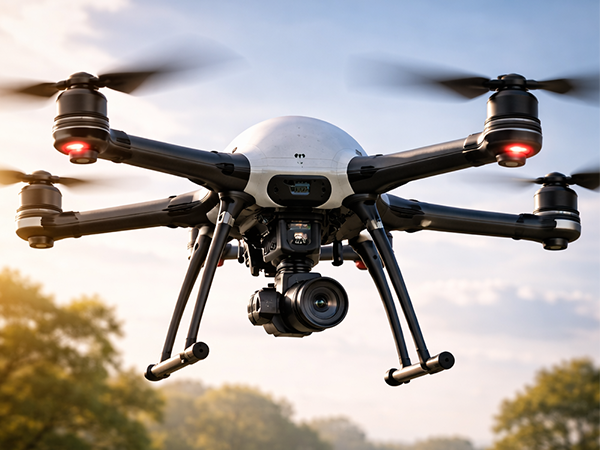
Why Drone Battery Selection Matters
Industrial UAVs face demanding operational requirements: - Long flight missions - Heavy payloads (cameras, sensors, spraying equipment) - Harsh environmental conditions (dust, rain, temperature extremes)
The wrong battery can lead to: - Reduced flight time - Insufficient power for takeoff - Voltage drops under load - Overheating or fire risk - Shortened battery lifespan
High-quality UAV batteries ensure stable power delivery, optimal weight distribution, and safe operation even under extreme conditions.
Key Factors to Consider When Choosing a Drone Battery
1. Energy Density
Energy density is measured in Wh/kg and indicates how much energy a battery stores per kilogram. For drones, higher energy density allows longer flights without adding weight.
Battery Type | Energy Density (Wh/kg) | Typical Use |
Lithium-ion (Li-ion) | 150–250 | Long-range industrial UAVs |
Lithium polymer (LiPo) | 180–260 | High-discharge, lightweight drones |
Lithium iron phosphate (LiFePO4) | 90–160 | Heavy-duty, high-safety UAVs |
High energy density supports heavier payloads like high-resolution cameras or spraying systems.
2. Weight Considerations
Weight directly affects flight performance. Extra battery weight reduces maneuverability and flight time. Customized battery pack design is critical to achieve optimal weight-to-capacity ratio.
3. Discharge Rate (C Rating)
The C rating indicates the maximum current a battery can safely deliver. Industrial drones need high discharge rates for takeoff, rapid acceleration, and heavy payload operations.
Example: A 10Ah battery with 10C rating delivers 100A safely.
4. Cycle Life
Cycle life measures how many charge-discharge cycles a battery can complete before capacity drops below 80%.
Battery Type | Typical Cycle Life |
LiPo | 300–500 cycles |
Li-ion | 500–1000 cycles |
LiFePO4 | 2000+ cycles |
Long cycle life reduces replacement costs for commercial drone fleets.
5. Battery Safety
Industrial drone batteries must be safe under high load and challenging conditions. Safety features include: - Overcharge protection - Over-discharge protection - Overcurrent protection - Short-circuit protection - Thermal protection
6. Smart Battery Management System (BMS)
A BMS monitors battery health and ensures safety. Key BMS features: - Cell voltage monitoring - Temperature monitoring - Cell balancing - Overcurrent and overcharge protection - Communication with drone flight control systems (CAN, SMBUS)
7. Environmental Resistance
For outdoor UAV operations, battery packs should resist dust, water ingress (IP-rated enclosures), vibration, and extreme temperatures. Industrial drones often use IP67 or IP68-rated battery packs for maximum reliability.
Types of Batteries for Industrial UAVs
Lithium Polymer (LiPo)
· Advantages: Lightweight, high power output
· Disadvantages: Shorter cycle life, sensitive to overcharge
Lithium-ion (Li-ion)
· Advantages: Higher energy density, longer flight time
· Disadvantages: Lower discharge rate compared to LiPo
Lithium Iron Phosphate (LiFePO4)
· Advantages: Excellent safety, long cycle life
· Disadvantages: Lower energy density, heavier weight
Custom UAV Battery Solutions
For OEM drone manufacturers, custom battery packs provide: - Custom voltage and capacity - Optimized form factor for drone frame - Smart BMS integration - Waterproof design - Quick-swap or modular battery systems
Custom packs allow UAVs to maximize payload and flight time while ensuring safety.
Comparing LiPo, Li-ion, and LiFePO4 for UAVs
Feature | LiPo | Li-ion | LiFePO4 |
Energy Density | High | Medium-High | Medium |
Weight | Lightweight | Medium | Heavier |
Discharge Rate | Very High | Medium | Low-Medium |
Cycle Life | Short | Medium | Long |
Safety | Medium | Medium | High |
Tips for Selecting the Right Drone Battery
1. Identify drone mission requirements (flight time, payload)
2. Calculate required energy and discharge rate
3. Prioritize safety and environmental resistance
4. Consider custom solutions if standard packs don’t meet specs
5. Ensure smart BMS integration for monitoring and protection
FAQ
Q1: Can I use LiFePO4 batteries instead of LiPo for industrial drones?
A: Yes, LiFePO4 batteries provide higher safety and longer cycle life but are heavier. Suitable for heavy-duty industrial UAVs.
Q2: How do I extend battery life?
A: Avoid deep discharges, operate within recommended temperature ranges, and use BMS-managed charging.
Q3: What is the ideal discharge rate for inspection drones?
A: Typically 10–20C, depending on motor power and payload.
Q4: Are waterproof drone batteries necessary?
A: For outdoor and harsh environments, IP67/IP68-rated batteries significantly improve reliability.
Future of UAV Battery Technology
· Higher energy density materials
· Smarter battery management systems
· Faster charging capabilities
· Modular and lightweight pack designs
These innovations will enable drones to fly longer, carry heavier payloads, and operate more efficiently.
Conclusion
Selecting the right drone battery is critical for industrial UAVs. Consider energy density, weight, discharge rate, cycle life, safety, and environmental resistance. Partnering with an experienced lithium battery manufacturer can ensure customized solutions optimized for your drone platform.
Related articles
-
2026-03-04
LiFePO4 Battery Upgrade Guide



 E-mail


 +86 13510702894