



Lithium Battery Export Certifications: 2026 Complete Guide
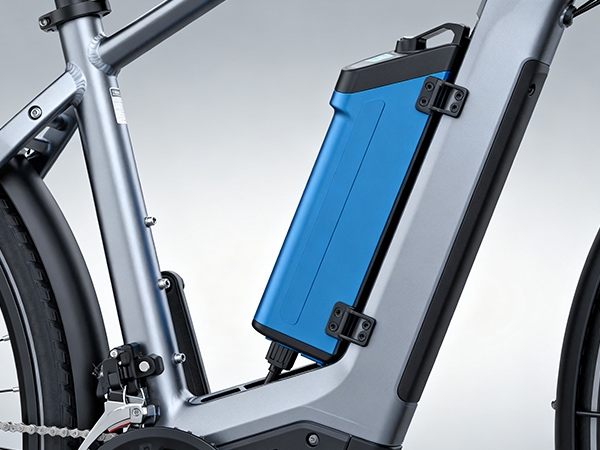
Lithium batteries are widely used in electric bicycles, AGVs, medical devices, drones, industrial robots, and energy storage systems. However, due to their chemical energy density, they are considered potentially hazardous during transport or improper use.
Without proper certifications, exports may be delayed or rejected, leading to financial losses and reputational damage. Certifications not only ensure legal compliance but also guarantee that products meet safety, performance, and environmental standards.This guide provides a comprehensive overview of the certifications needed to export lithium batteries in 2026.
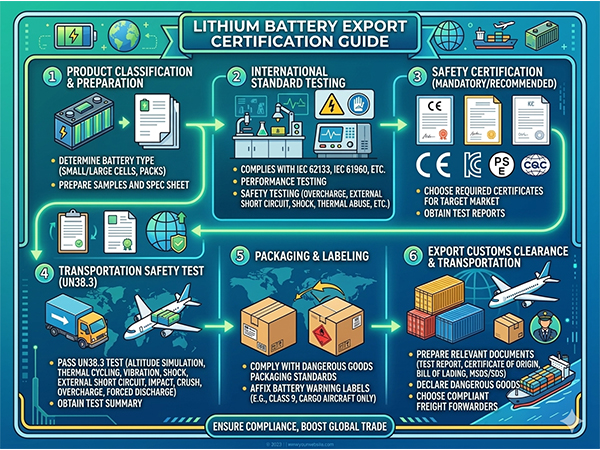
Key Global Certification Standards
UN 38.3 – Transport Safety
UN 38.3 testing is mandatory for lithium batteries before they are transported by air, sea, or land. Tests include:
Altitude simulation
Thermal cycling
Vibration and shock
Short-circuit tests
Overcharge and forced discharge
Passing UN 38.3 ensures batteries are safe for global logistics.
CE Marking – European Compliance
The CE mark demonstrates conformity with EU safety, health, and environmental requirements. It is required for lithium batteries entering the European market, covering:
Electrical safety
Chemical compliance
EMC (Electromagnetic Compatibility)
IEC 62133 – Electrical Safety Standard
IEC 62133 is an international standard for safe operation of portable sealed secondary cells and batteries, including lithium-ion. Key points:
Protection against overcharging, over-discharging, and short-circuits
Fire and explosion prevention
UL 1642 / UL 2054 – US Safety Standards
For North American exports, UL certification is widely recognized:
UL 1642: Standard for lithium batteries
UL 2054: Household and commercial battery safety
These certifications indicate the battery has passed rigorous safety testing.
FCC – Electromagnetic Compatibility (EMC)
For lithium batteries integrated with electronic devices (e.g., e-bikes, drones), FCC certification ensures compliance with US electromagnetic emission limits.
Other Regional Certifications
PSE (Japan): Electrical safety certification
KC (Korea): Korea Certification for electrical products
BIS (India): Indian Standards for battery safety
3. Environmental and Hazardous Material Regulations
RoHS Compliance
Restriction of Hazardous Substances (RoHS) ensures lithium batteries contain minimal hazardous materials like lead, cadmium, or mercury.
REACH Regulation
REACH compliance ensures chemical safety in the EU market. It addresses risks associated with substances used in battery production.
WEEE Directive
Waste Electrical and Electronic Equipment (WEEE) compliance ensures batteries are properly recycled and disposed of.
4. Airline and Shipping Compliance
Lithium batteries are classified as dangerous goods due to fire risk. Compliance with IATA and IMDG rules is mandatory:
IATA Dangerous Goods Regulations: Required for air transport
IMDG Code: Required for sea transport
Packages must include correct labeling, documentation, and UN 38.3 test reports.
5. Steps to Obtain Certifications
Pre-Testing: Internal testing to ensure compliance with safety standards
Choose Accredited Lab: Use recognized laboratories for UN 38.3, UL, and IEC testing
Documentation: Maintain technical files, test reports, and compliance certificates
Apply for Regional Certification: CE, PSE, KC, BIS, etc.
Labeling and Packaging: Include all required marks, warnings, and handling instructions
Regular Audits: Some certifications require periodic factory inspections
6. Why Choosing the Right Manufacturer Matters
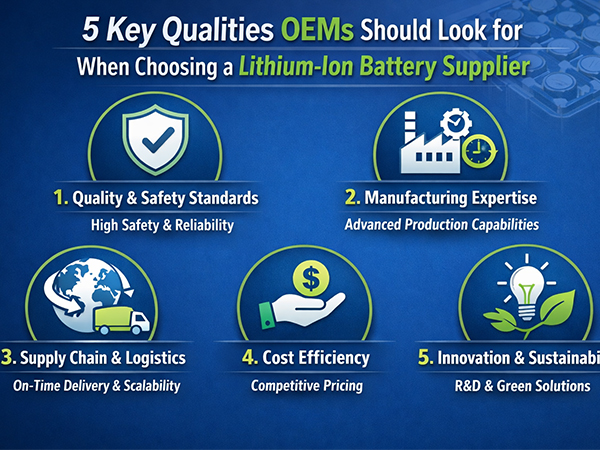
Selecting a manufacturer with strong compliance experience reduces risk, ensures faster certification, and guarantees product safety. At FirstPower, we provide:
Over 12 years of experience in lithium battery manufacturing
UN 38.3, IEC 62133, and multiple international certifications
Tailored battery solutions for e-bikes, AGVs, drones, energy storage, and industrial equipment
Quality control, testing, and documentation to simplify global export
7. Frequently Asked Questions (FAQ)
Q1: Are certifications mandatory for all lithium batteries?
Yes, without proper certification, most countries will not allow import, and shipping carriers may refuse transport.
Q2: How long does UN 38.3 testing take?
Typically 2–4 weeks depending on the laboratory and testing complexity.
Q3: Can one certification cover multiple countries?
Some standards like UN 38.3 and IEC 62133 are globally recognized, but local regulations (e.g., CE, PSE, KC) are country-specific.
Q4: Does FirstPower provide certification support?
Yes, we assist clients with documentation, testing, and export compliance.
Conclusion
Exporting lithium batteries in 2026 requires a thorough understanding of global safety, environmental, and transport regulations. Certifications such as UN 38.3, IEC 62133, CE, UL 1642 / 2054 / 21700, and regional marks are essential to ensure market access and safety. Working with a trusted manufacturer like FirstPower can simplify this process, mitigate risk, and accelerate international business growth.
For inquiries about certified lithium battery solutions, contact FirstPower today to ensure your products meet the highest safety and compliance standards.
Related articles
-
2026-03-04
LiFePO4 Battery Upgrade Guide


 E-mail


 +86 13510702894